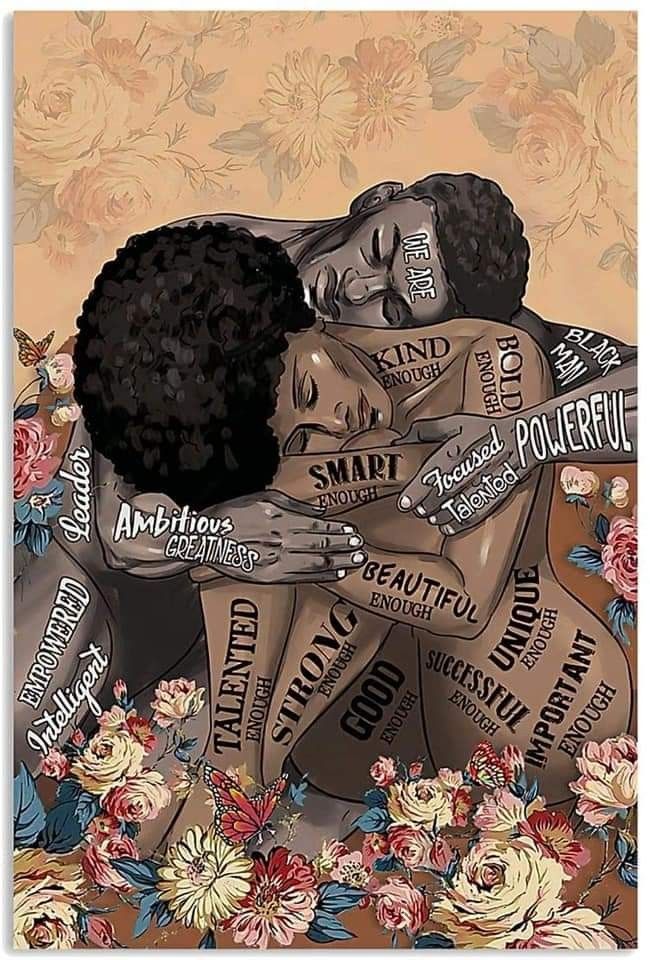
Hey y’all!!
For my returning readers, I see you! To my new readers, I’m so glad you chose to stop by!
Welcome to part 3 of the Real Love, Real Talk series. This is the last one y’all!
So let’s get into it… we’re breaking down romantic love. That beautiful chaos we chase, cherish, and sometimes side-eye. Let’s unpack it.
Fair warning, this is a long read so make sure you got time!
Part 3: Autopsy of Black Love: What We Lost, What We Found
I can’t tell you how many times I’ve heard “all men are dogs” or more commonly said in the melanated multitude, “men ain’t SHIT!” Fellas say, “she’s too masculine or what does she bring to the table?”
This is the break down and the setup of love in the black community. Black love carries a lot – joy, trauma, tradition, and truth. We’re unpacking the holy, the hood, the heartbreak, and the healing.
From pews to pillow talk, from generational wounds to spiritual vows, we’re naming what shaped us, what broke us, and what still makes us believe. Because to heal it, we gotta face it.
Let’s get into it shall we?
Black Love as Resistance and Resilience
Love hit different back in the day; I’m referring to the late 18-early 1900’s. It didn’t start with hashtags or cute emojis, it started on front porches and in whispered promises when the law said we weren’t even fully human. It wasn’t until the late 1800’s that black folks were allowed to be legally married. Back then it wasn’t just about romance, it was about reclaiming dignity. Saying “I do” was a radical act. It meant, “You are mine, and I am yours, in front of God and the state that once denied us both.” That moment shaped how we define love to this day: not just as affection, but as affirmation, protection, and legacy.
Let’s be real, resilience ain’t always romantic. Sometimes it’s two people choosing to unlearn trauma together. Sometimes it’s showing up for each other when the world won’t. It’s the sacrifices, the forgiveness that feels like freedom, and the kind of loyalty that doesn’t need to be loud to be real. Black love is chaotic and layered, lived-in and lived through, and still learning. Each time we choose it, through the mess, the magic, and the ministry, we’re rewriting the narrative. We’re saying: our love is worthy, our healing is holy, and our joy is revolutionary.
Unmasked & Unbothered: Loving Without the Performances
Let’s be honest, being seen is scary when you’ve been taught to survive by staying guarded. In our community, vulnerability often feels like an unaffordable luxury. We were taught to keep it cute, keep it strong, keep it surface level, and keep it moving. At the first sign of something being ‘off’ we exit stage left. But love? Real love? It asks us to slow down and let somebody see the parts we usually hide. The fears. The triggers. The soft spots. When someone chooses you and your emotional mess with tenderness and patience? Whew. That’s something sexy. It’s safety. It feels like home.
When I put on my moomoo without hesitation or fear of judgement, I know you love me! When my period coming on isn’t a big deal and you know how to comfort and take care of me…we locked in! For someone to intentionally get to know your body, your moods, your rhythms, and choose you in spite of. It should send chills up your spine.
Sis, if your man is out here fighting the world just to exist, the last thing he needs is to come home and fight you too. He might be strong, but he’s still human. Still soft in places he doesn’t always show. You want love that’s tender, consistent, and affirming? Cool. But make sure you’re giving that same energy back. You can’t demand emotional safety and then turn around and make him feel like he’s weak for needing it.
Be his soft landing. His shoulder when the weight gets heavy. His place to cry without judgement. Let him take that mask off without worrying you’ll use his vulnerability as ammo later. If you want a man who’s open, honest, and emotionally available, you have to be the kind of woman who knows how to hold that truth with care. That’s grown love. That’s sacred love.
Love isn’t hard but it is work.
The Relationship You Have With You Is The Blueprint
Ladies and Gentlemen, I say this in love. Stop expecting a relationship to heal a wound it didn’t create.

Yep! I said it! Many of us hop into a relationship thinking it’s going to be what heals us from our daddy, mommy, or whoever hurt us issues. ABSOLUTELY NOT! What’s going to happen is you gone hop in that relationship and either date the same person in a different body or ruin it because you are making that man/woman pay for something they didn’t do!
Listen, I did it so I can speak on it. It wasn’t until I started dealing with me and my wounds that I could define what I did and didn’t want in a relationship.
Self-love forces you to face your triggers instead of making them someone else’s responsibility. If you don’t address those wounds, you’re going to bleed on your partner who didn’t cut you. Let’s keep it💯 – unhealed hurt will sneak into conversations, reactions, and expectations you didn’t even know you had. That childhood abandonment? It shows up as “Why didn’t you text me back fast enough?” That betrayal from your last relationship? Suddenly, every harmless question feels like an interrogation. When you don’t tend to your wounds, you start treating your partner like the person who caused them. That’s not fair to them or you. Healing is how you stop projecting old pain onto new love.
You don’t have to be perfect before you date, but you need to do the work to be aware. Awareness allows you to communicate your triggers instead of blowing up. It allows you to pause before you assume the worst. Most importantly, in my opinion, it means you don’t make your partner responsible for fixing what someone else broke. You show up as a partner, not a patient. When you love yourself enough to face your wounds, here’s what happens:
- You teach people how to love you.
- You give your relationship a fighting chance to be healthy, whole, and rooted in truth, not trauma.
When Your Childhood Pulls Up in Your Relationship
When I started dating, I was that girlfriend who stayed on edge, always questioning my place, always bracing for the shift. If anything about how you talked to me, texted me, or connected with me changed, even a little, my whole body went into fight mode. Suddenly I’m running through scenarios, wondering what I did wrong or who the mysterious “you-know-who” is that you must be cheating with. The smallest change felt like a threat, and one tiny trigger could send me spiraling.
But the truth is, the way we cling, shut down, chase, or retreat didn’t start in adulthood; it started in the houses we grew up in, the love we saw (or didn’t see), and the safety we did or didn’t feel. We’re grown now, but our childhood still knows how to pull up uninvited.
Back then, I had no idea I was operating from an anxious attachment style. Honestly, I didn’t even know attachment styles were a thing. But once I learned about them, everything clicked. My reactions weren’t about my partner, they were echoes of old wounds, old fears, old memories that kept pulling up uninvited.
The beauty is this: once you recognize the pattern, you can rewrite it. You can choose connection over chaos, honesty over hiding, and softness over survival mode. Attachment styles aren’t destiny – they’re indicators, starting points, invitations to grow. When you see how your past is trying to run your present, you get to decide whether it still gets a say. That’s the moment your childhood slides to the backseat, and the healing, grown-you finally takes the wheel.
I’m Happy with Jesus AND I Want a Partner
Listen Saints… if you are old school, please go ahead and scroll past this section because it may rub you the wrong way. This is my experience and my opinion. Let’s not be holier than thou and judge-y cause we’ve all fallen short of his glory AMEN!!
Raise your hand if you were raised in the church.

If you were raised in the church, you already know that dating is one of those things that has strict guidelines. Y’all can spend time together but there is no spending the night. Y’all can go on a trip together but you better stay in separate rooms. Y’all can be in a relationship but there is no shack’n up. Most importantly there is no sex before marriage. PERIODT.
These rules were non-negotiable and Lord forbid if you were caught doing any of them you were hell bound unless you repented in front of God and the church.
I was always confused on the expectation that you were to be “marriage ready” without doing anything married people do. Strict rules, major consequences, and no guidance. Meanwhile, you’re a whole teenager or young adult with hormones doing backflips, but you’re supposed to be stone faced as if you feel nothing. The guilt was real. The shame was heavy. The message was real loud: desire makes you dangerous, and mistakes make you unworthy.
Purity culture shaped how we approached intimacy; not just physically, but emotionally. It taught us closeness wasn’t safe, our feelings were ‘bad’, and to equate love with restraint not connection. Our ancestors had good intention, which was to protect us, but it caused confusion, secrecy, and a whole lot of pretending. Their approach didn’t allow for real, open, conversation. It didn’t allow for truth either, because the truth got you smacked with holy water and all the mothers of the church praying for you and talking about you, all while Mother May I’s husband is supposedly Ms. Mary Macks daughter’s daddy.

One thing that bothers me about the black church is that we have phrases we throw around and don’t give context, definition, or insight to what it means. “Equally yoked” is one of those phrases that is used so often it became background noise. I came to realize that phrase isn’t about perfection it’s about alignment. Are we going in the same direction? Do we have shared values, vision, and willingness to grow? It’s not about who knows the most scripture or who’s the breadwinner. It’s about two people who can walk together without dragging, resenting, or spiritually outpacing each other.
Many times, that phrase is used as a measuring stick of someone’s character. If the person doesn’t go to church every Sunday, if they don’t serve on any ministry, if they have children out of wedlock, the list goes on as to what does not make a person equally yoked. That’s where harm creeps in. Spiritual pressure unveils when one partner feels like they have to perform faith to be accepted. It creates imbalance, not intimacy. It turns love into a spiritual audition instead of a spiritual partnership.
When you get it right, “equally yoked” feels like peace. It feels like support. It’s two people choosing alignment over appearance. That’s when faith becomes a foundation, not a filter you have to pass through to be loved.
For many of the melanated multitude, church is a big part of what makes us who we are. We grew up in it; it serves as our compass for life. However, we have to admit that what we learned about love, marriage, and worthiness wasn’t always right. A lot of the ideas are based on antiquated ideologies and slave mentality that is built in our DNA.
The church was our first classroom for romance. We watched ‘successful’ couples hold hands in the pew like they were the blueprint. We heard testimonies about “waiting on God” for a spouse. Marriage was considered a level up in life and faith. Regardless, if we realize it or not, all of that shaped what we believed we deserved.
The church taught us that marriage was the ultimate sign of spiritual maturity. You could be thriving in your career, healing emotionally, or growing in your faith, but if you weren’t married, people still looked at you like you were “in progress.” That led to internalizing the idea that our worthiness was tied to being chosen.
Sidenote: Hmmm… yet we condemn the term ‘pick me’. I digress.
Purity culture added another layer, making desire something to fear and intimacy something you were expected to figure out on your wedding night after years of pretending you didn’t have a body. We grew up spiritually informed but emotionally underprepared, knowing how to pray for a partner but not how to communicate with one, how to endure but not how to set boundaries.
With all that is wrong, there is still a lot that’s right. The church gave us something valuable: the belief that love is sacred and purposeful. Partnership is intentional. The work now is separating the wisdom from the weight, keeping the spirituality while releasing the shame. Real love doesn’t require perfection or performance. When we let go of the pressure and hold onto the purpose, we finally experience love that’s not just holy, but healing.
Struggle Love Is NOT A Love Language
There’s a version of love many of us were handed that wasn’t really love it was survival dressed up as loyalty. Endurance packaged as commitment. “Hold him down no matter what” sold as strength. And because so many of us grew up watching our mothers, aunties, and grandmothers carry entire relationships on their backs, we learned to confuse suffering with devotion. We inherited a blueprint that said love is proven by how much pain you can absorb without breaking.
Baby Boy, Love & Basketball, movies that literally show men dragging women through emotional mud, and somehow the woman staying is framed as noble. And here our unhealed selves go, clapping and crying talking ’bout “relationship goals.” Be serious? At the time? Absolutely. Because our trauma recognized something familiar and familiar felt right. We thought if we just endured long enough, the scrub would magically transform… or his other women would finally heal and leave him alone.
Media, and yes, social media too, has us believing that struggle love is the pinnacle of romance. Movies, songs, skits, all teaching us that real love is measured by how much chaos you can survive without walking away. We watched women cry in the dark and call it loyalty, watching men finally “get it together” only after dragging someone through emotional hell, and somehow that became the model. Trauma got packaged as passion, dysfunction got edited to look deep, and we learned to clap for relationships that were screaming red flags. Before we even knew it, pain felt familiar, and familiar felt safe not because it was healthy, but because it was all we ever saw celebrated.
Struggle love ain’t cheap. That debt is heavy, and the interest rate is disrespectful. You start off being patient, then understanding, then giving grace like you’re running a nonprofit for emotionally immature and unavailable men. And slowly, pieces of you start going missing. Your joy gets quieter. Your confidence gets shaky. Your needs get so suppressed you forget you even have them. Suddenly you’re carrying emotions that don’t belong to you, picking up bags they put down, managing someone else’s storms while ignoring your own, calling it partnership. The worst part is how numb you become to it; how normal the exhaustion starts to feel. You wake up one day realizing you’ve been pouring from an empty cup for so long you don’t even remember what it feels like to be emotionally held. That’s the real cost; losing yourself in the name of a love that tried to trade your reality for their potential.
There’s comes a time in your life when you realize you’re no longer interested in performing strength just to keep a relationship alive. You start craving a love that lets you be your full self no shrinking, no sacrificing your peace, no carrying someone else’s emotional baggage to prove you’re worthy. It starts quietly: a boundary here, a “no” there, a refusal to abandon yourself the way you used to. Then it clicks. I don’t have to struggle to be loved. You start choosing reciprocity over resilience, emotional safety over chaos, and partners who meet you where you are instead of draining you dry. It’s not that you stopped believing in love you just stopped believing love has to hurt to be real.
I Don’t Want to Leave but I Got to Go Right Now!
Listen… the gift of goodbye is real and it’s holy. Walking away from the version of love that dimmed your light and made you question whether love was even worth it is terrifying and freeing all at once. It’s not that you stopped caring, but you started healing. Leaving becomes an act of love: love for your future, your peace, and the version of you who deserves softness and stability. You break the generational pattern by refusing to reenact it. You teach your children, your community, and your own heart that love should never require self-abandonment. Liberation is not loud; it’s steady. It’s the quiet confidence of knowing you’d rather be alone than attached to someone who confuses your endurance with unconditional access. It’s the moment you realize peace is the prize, not the punishment.
At some point, you realize the version of love you were taught to endure is not the love you were created to receive.
Black Love, Evolved
Can I say that I love my generation, the millennial generation. We are the rebels, we ask the hard questions, we challenge the status quo, and we change what we don’t agree with, and I love that for us. Not just for us, but for those who come after us.
The future of Black romantic love is soft, intentional, and rooted in healing not survival. The love we are designing doesn’t ask us to shrink, endure, or perform strength just to be chosen. Instead, it invites us to show up whole, honest, emotionally present, and accountable. We are no longer impressed by struggle, clapping for chaos, and no longer mistaking pain for passion. We are writing our own script, that centers reciprocity, emotional safety, and joy. The future is true partnership, where both people are allowed to be vulnerable, talk to each other like we got some sense, and being honest when we’re hurt. We are healing individually so we can love collectively without reenacting the wounds we inherited.
Black love’s future is communal. Families are breaking generational patterns and raising children who don’t have to recover from their childhoods before they can love someone else. It’s friendships that model healthy intimacy. It’s communities that celebrate ease instead of glorifying endurance. It’s spiritual alignment that uplifts rather than restricts. It’s choosing partners who see you, hear you, and grow with you not because they need saving, but because they’re committed to evolving alongside of you.
Most importantly, the future of Black romantic love is free. Free from the struggle love narratives, the pressure to be everything for everyone, and from the belief that we must sacrifice ourselves to keep a relationship alive. The future is abundant, joyful, and rooted in truth. It’s the kind of love our ancestors prayed for but didn’t always get to experience, a love that lets us rest, breathe, and be fully human. This love feels like home.
Love is patient. Love is kind… we know what love is but sometimes we forget how to be loving and loveable. As we grow, we realize that we are not the same people and that we can choose to love differently. We no longer have to hold onto broken things to hold us together. We’re not repeating stories that were never ours to carry. This is the era on intentional love, intentional peace, intentional joy. We get to honor our ancestors not by surviving, but by thriving in ways they prayed were possible. So, if you’re standing at your own crossroads, wondering whether to stay where it’s familiar or walk towards what’s free, let this be your confirmation: go where your soul can breathe. Go where your heart can rest. Go where love feels like truth, not labor. The future is generous, and it’s waiting on you to show up whole. May we all keep choosing the kind of love and the kind of life that lets us finally exhale.
Healing is a journey; you choose where you want to go.
I love y’all 🤟🏾
 Life B Life'n